
The Evolution and Development of Reasoning
From an evolutionary perspective, beliefs are a distinct type of mental state that support flexible and adaptive reasoning. One key feature of beliefs is their sensitivity to evidence, which has guided much of our recent work on evidence-based reasoning in both human and non-human primates.
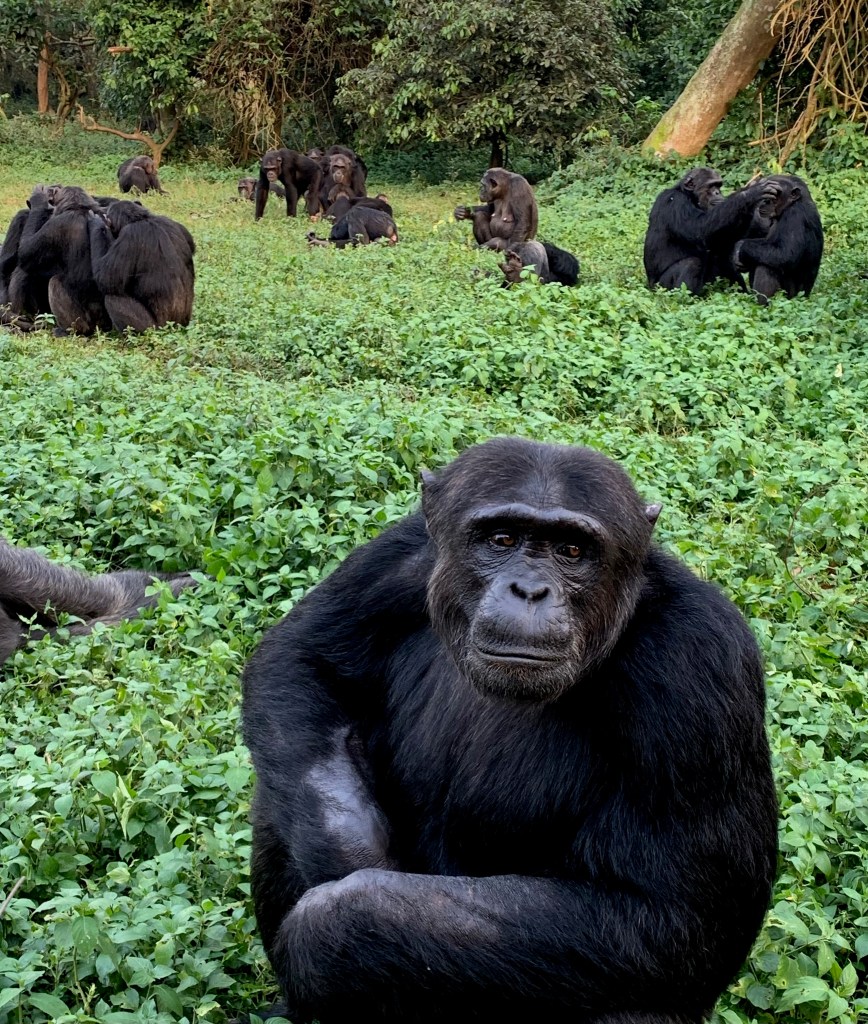
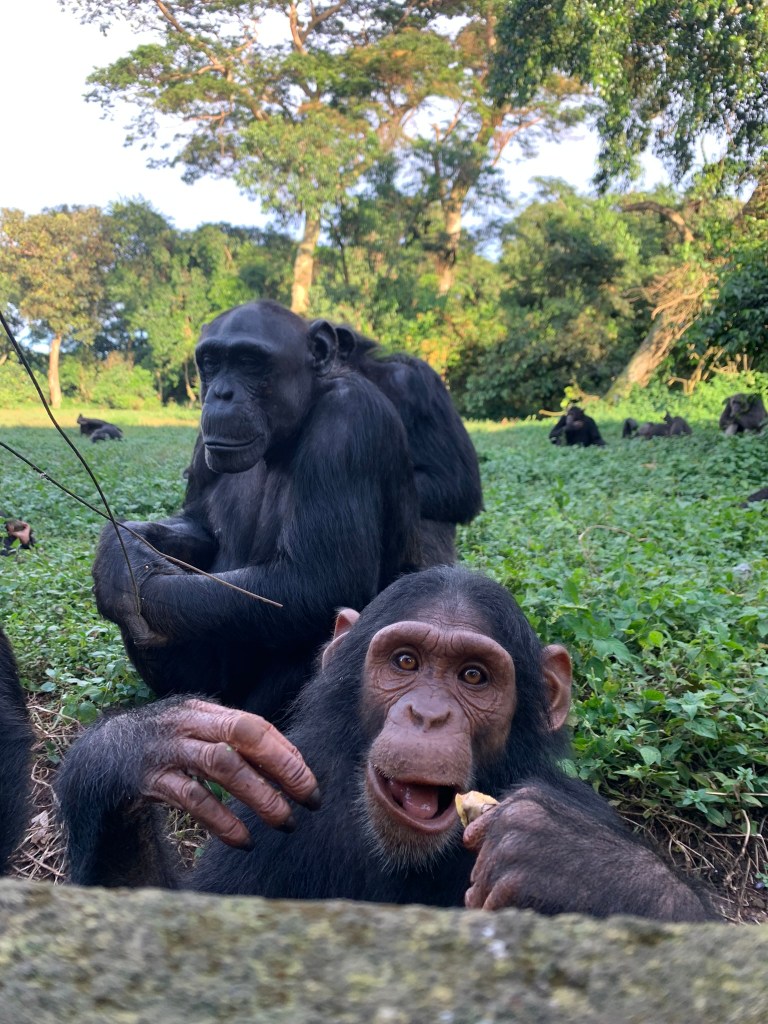
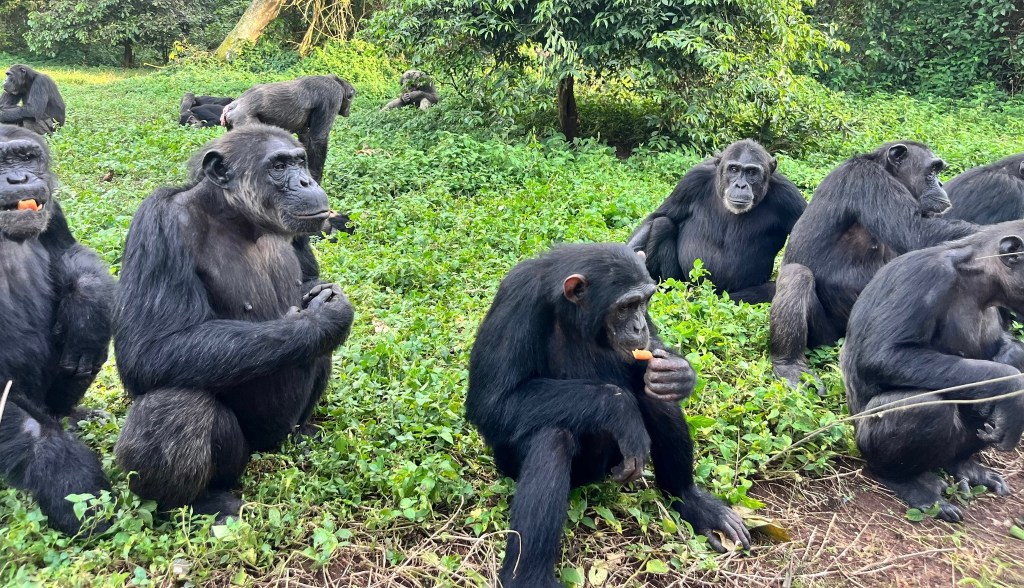
We investigate how different primate species form and revise beliefs in response to evidence. Our studies show, for example, that chimpanzees demonstrate several hallmarks of rational thought: they preferentially form beliefs supported by stronger evidence, update those beliefs when counter-evidence is more compelling, and seek out additional information when evidence is ambiguous (Schleihauf, Sanford, et al, 2025; Hilde-Jones et al., under review; Haux et al., 2025). These patterns suggest that chimpanzees metacognitively evaluate conflicting evidence in a reflective, reasoned way.
By around age three, human children exhibit similar capacities (Schleihauf et al., 2022). Human rationality appears to build on these shared foundations through uniquely human social experiences. One recent line of research explores how disagreement contributes to the development of metacognitive skills. Our findings suggest that encountering disagreement encourages children to consider alternative possibilities (it expands their ‘consideration set’), which in turn supports more effective confidence monitoring, source evaluation, and information search (Langenhoff et al., 2025).
Distinctively human social experiences can also have negative consequences for children’s developing reasoning skills. For example, in a recent study (Confer et al, 2025), we investigated how group membership influences belief formation and revision in childhood. We found that group membership modulates children’s evidentiary standards, leading to biased epistemic practices.
Photos curtesy of Dr. Laura Lewis and Ngamba Island.
The Evolution and Development of Collaboration
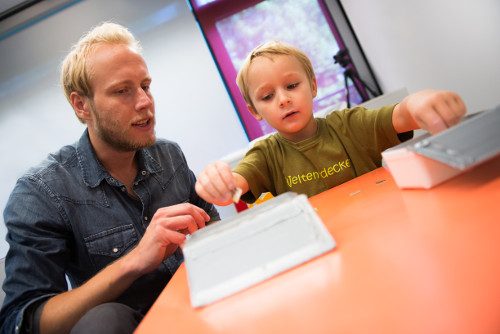
From an evolutionary perspective, the sense of fairness represents a cooperative solution to the problem of competition, a kind of ‘cooperativization of competition’. Fairness enables individuals to find balanced, mutually acceptable outcomes in situations where motives may conflict, thereby helping to sustain long-term cooperation.
In our research, we’ve found that the sense of fairness, understood cognitively as triadic social comparison—evaluating how you are treated relative to how someone else is treated—may be a uniquely human adaptation (see Ritov et al., 2024, for a meta-analysis). While many nonhuman primates, such as chimpanzees and rhesus monkeys, do not appear to form such triadic expectations, they do use dyadic comparisons: evaluating how they are treated relative to how they could have been treated (Engelmann et al., 2017, 2022). These dyadic expectations help regulate social relationships, but they lack the comparative structure underlying human fairness.
Turning to the ontogeny of fairness in humans, we have advanced a model of fairness grounded not just in resource distribution but in social respect. This “fairness as equal respect” view proposes that a single psychological mechanism—a desire for equal recognition—underpins various expressions of fairness in children (Engelmann & Tomasello, 2019). On this account, fairness judgments are fundamentally about the social meaning of a distributive act: whether it conveys equal respect. For recent empirical support for this view, see Jacobs et al, 2025.


 Social Origins Lab